

Some of the most important skills children develop are not taught through a textbook. A child learns patience by working through something difficult, focus by staying with a task, and creativity by having the freedom to experiment. These skills take shape gradually, through repeated attempts, mistakes, and the satisfaction of eventually getting something right.It’s exactly this kind of learning that Saunak Ghosh, Co-Founder and CEO of TalentGum, believes a musical instrument can quietly teach -often before a child can even put words to what “discipline” or “focus” mean.
Music provides the ideal environment for this kind of growth. A child learning the keyboard must listen carefully, remember patterns, coordinate different movements, and practise consistently. At the same time, music gives them room to experiment, interpret, and create. Over time, the process becomes about much more than playing the right notes: it shapes how a child handles setbacks, works through challenges, and expresses themselves.


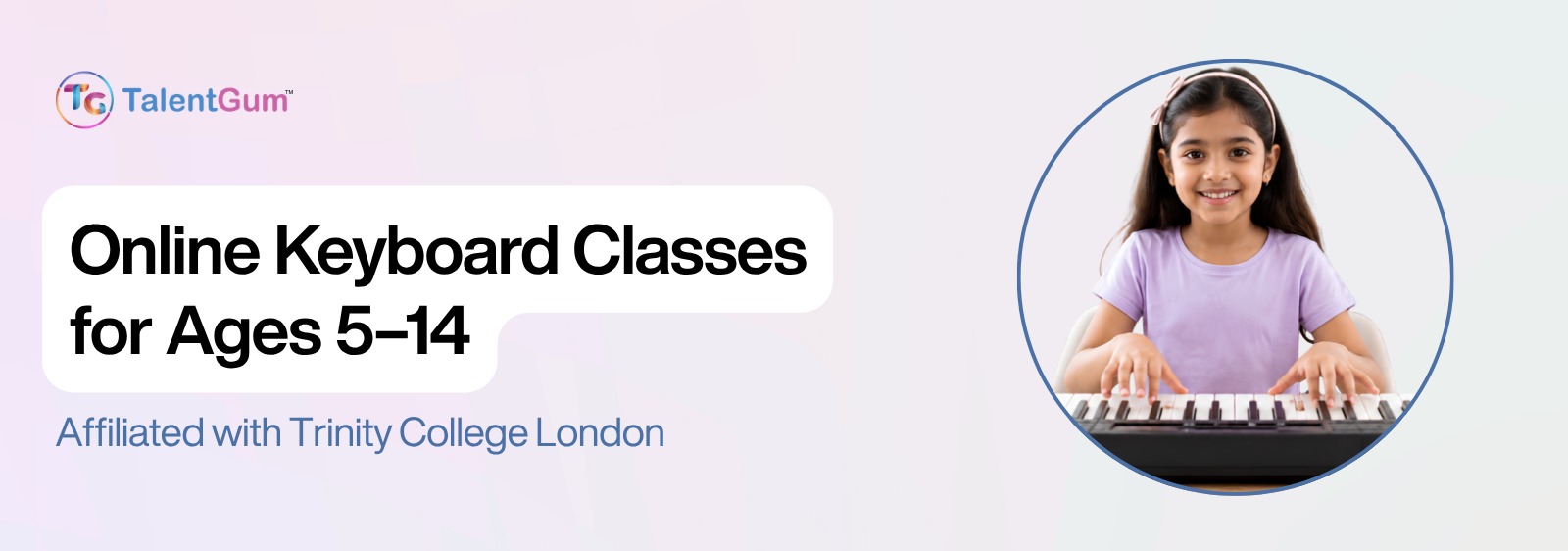
This is the thinking behind TalentGum’s Online Keyboard Course, designed for children aged 5 to 14. The challenge for parents is not simply finding an activity that offers these benefits; it is finding a learning experience that keeps a child engaged long enough to actually build these skills.
TalentGum’s approach is built around live, curriculum-led sessions, with teachers offering personalised guidance that helps children recognise and correct mistakes as they learn. TalentGum is a registered Trinity College London examination centre, and the curriculum takes children through a progressive 12-month learning journey, moving from musical fundamentals and sheet music to scales, chords, ear training, musical expression and more advanced concepts such as intervals and chord progressions. The program includes 40 songs, more than 40 theoretical concepts and skills, and regular assessments to help children track their progress. As students advance through the curriculum, they also prepare three Trinity exam pieces, culminating in a Trinity College London graded exam, with certification issued by Trinity.
What makes the course particularly meaningful for a child’s broader development, though, isn’t the certification track – it’s what quietly happens in the practice itself. Sitting with a tricky passage, hands moving independently, teaches a gentle kind of patience and focus that’s hard to build any other way. Training the ear to recognise a note or a rhythm sharpens the same listening a child brings to a conversation, helping them tune in a little more closely to the people around them. And picking out a small melody of their own, even a simple one, gives children a warm, wordless way to express how they’re feeling – something that can mean the world to a child who finds it easier to show a feeling than to say it out loud.
TalentGum has built the course to keep learning engaging, using more than 40 interactive games and activities to reinforce concepts that might otherwise feel abstract to a young learner. Children also get opportunities to put their learning into practice through showcases and challenges, where they can prepare and present their work, share their skills with a wider audience, and build confidence through the experience. One parent recently described the platform’s “Play-to-Learn” method as the first approach that got her ten-year-old genuinely excited about music theory.
This speaks to a broader shift in how families are thinking about extracurricular learning. As academic schedules grow more demanding, early exposure to structured music education is increasingly seen not as a distraction from a child’s development, but as a meaningful contributor to it – building concentration, discipline, and creative confidence that carry over into academics and beyond. For TalentGum, the keyboard is ultimately a means to a broader end: helping children discover that focus and creativity aren’t opposites, but skills that grow together, one practised song at a time.